Tendd Product Research
A mobile-first, desktop-responsive web app that helps people who are not into finance see and control their recurring payments and subscriptions, turning money anxiety into calm, everyday clarity.
6 Key Conclusions
- The market is full of powerful apps and empty of peaceful ones. Every major competitor has expanded into full financial management, trading calm clarity for feature depth. The unoccupied position is "the calm subscription tracker."
- Trust must be earned before data is asked for. Every bank-connected competitor asks for bank access in step 1 or 2 of onboarding, before earning trust. This is the single biggest UX gap across the category.
- The cancel-and-save moment is the most emotionally powerful moment in the product and no competitor has designed it as a positive experience. It is the natural upgrade trigger and the most shareable moment.
- Plain language and active voice in financial communication are industry best practices (Monzo has made this a public design principle), but no subscription tracker has made it a core differentiator.
- The EU market is underserved at the calm, simple end. Emma has EU coverage but is complex and feature-heavy. Bobby is simple but iOS-only and manual.
- The privacy-first user is a real, reachable segment - not an edge case. ReSubs has 18K+ users with zero bank connection required, validating a second activation path as a market expansion move, not a fallback. Source: resubs.app
Lean UX Canvas
One visual summary of the refreshed research. Framework: Jeff Gothelf, Lean UX Canvas v2.
People aged 22-42 with low-to-medium financial confidence pay for an average of 12 subscriptions (over $273/month) and feel a background anxiety about money leaking out. Existing finance apps serve motivated optimizers and bury subscription clarity under feature depth, so anxious users avoid them entirely. Source: resubs.app, competitive analysis P2.
All [? hypothesis]: 35-40% of new users see their populated subscription list in session 1. 30-day active rate 30% free / 60% paid. Free-to-paid conversion 6-10% within 90 days. Average $15-30/month saved per active user.
Primary: the Anxious Millennial, 26-36, in two equal paths - A1 will connect a bank if trust is earned, A2 refuses bank access and needs a private import path (validated by ReSubs' 18K+ users). Secondary: the Frugal 30-Something, 30-42, explicit cancel-and-save intent. Later: the Shared-Finances Couple.
See every recurring charge in one calm view (J1) and feel in control without becoming a finance person (J2). Find and cancel unused subscriptions (J3). Never be caught off guard by a price change or failed payment (J4). Stay private while doing it (J6). The feeling that matters: "I know what's going out, and I'm okay."
Dual-path onboarding with equal weight: bank auto-detect or private import/manual entry with a preset library. Guided Reveal of the subscription list as a calm discovery moment. Plain-language alerts. Cancel guides and direct links (Pro). Weekly digest, PWA home-screen widget, privacy-safe shareable snapshot.
Eight, in If / Then / Because format (Section 6). Highest stakes: H0 - calm visibility converts avoidance into control. Key supporting bets: showing value before asking for bank access raises connection rates (H1); the dual-path onboarding lifts total activation 15-25%; the upgrade trigger belongs at the forgotten-subscription moment (H4).
Will financially avoidant people actually look? The whole idea depends on the calm reveal producing relief instead of triggering the same avoidance that keeps them out of every finance app. No competitor evidence exists either way [?] - their users are all self-selected money-tool seekers.
A clickable "calm reveal" prototype with sample data, shown to 5-8 people screened for financial-avoidance behavior. Measure: do they complete the reveal, do they report relief or stress after seeing the total, and do they ask to try it on their own subscriptions. Pass: a majority report relief and want the real thing. No build required.
Framework attribution: Lean UX Canvas v2 by Jeff Gothelf. Populated June 11, 2026 from research/docs/strategy.md, research/docs/aarrr.md, and research/docs/competitive-analysis.md.
Strategy
Status: v_refresh (June 11, 2026). Formerly "Product Model" - migrated to the Strategy structure: objectives, segments, JTBD, business model, riskiest assumption. AIDA is retired; AARRR (Section 2) is the single funnel. Segment A split into bank-willing (A1) and privacy-first (A2), both equal-priority primary. Full detail: research/docs/strategy.md.
Audience Segments
The Anxious Millennial (Bank-Willing)
Comfortable with technology but avoids finance apps. Will connect bank if trust is earned first. Has a vague sense that money is "leaking out."
Research status: CONFIRMED. Trust barrier before bank connection is larger than assumed. Source: Monzo tone-of-voice, Phase 3 gap analysis.
The Anxious Millennial (Privacy-First)
Same anxiety and subscription-heavy profile as A1, but privacy concerns or distrust prevent bank connection. Will track manually if the experience is fast and calm.
Research status: NEW - validated by ReSubs 18K+ users, no bank required. Equal priority to A1. Source: resubs.app
The Frugal 30-Something
More financially aware, actively wants to trim spend. May already use a basic tool. Wants to find and cancel unused subscriptions without fuss.
Research status: CONFIRMED with higher acquisition potential than assumed. Intent is explicit (searching for the product). Source: Rocket Money testimonials, Phase 3.
The Shared-Finances Couple
Two people, some individual subscriptions, some shared. Neither has a complete view. Want a single household view to stop paying for duplicates.
Research status: CONFIRMED as later stage. Emma added collaborative budgets in 2025. Validates the need but confirms product complexity. Source: emma-app.com, Phase 3.
Business Model
Freemium SaaS (Tendd Pro). The user gets a calm, complete view of recurring spend, alerts that catch price changes before they hurt, and concrete cancellation help. The recovered money (target $15-30/month saved) is 2-4x the subscription price. Free tier: full, uncapped visibility of all recurring charges (the paywall is at depth - history, trends, advanced alerts - not at the number of subscriptions, per D3) - it must deliver the aha moment and build trust. Paid: $7.99/mo or $69/yr (locked, D4), with a lifetime option to test (validated by ReSubs and Bobby one-time models). Pricing raised from the original $4-6/mo hypothesis: verified live June 11, PocketGuard charges $12.99/mo (1M+ members) and YNAB $14.99/mo with no free tier. We deliberately avoid bill-negotiation revenue (Rocket Money: 35-60% of first-year savings) - flat SaaS aligns our revenue with the user feeling calm and staying. Sources: pocketguard.com/pricing, ynab.com/pricing, resubs.app
Riskiest Assumption
People who feel money anxiety and avoid finance apps will actually look - that seeing their full recurring spend in a calm frame reduces their anxiety and feels like relief, rather than triggering the same avoidance that keeps them out of every other finance app.
This is a risk to value, not feasibility. Competitor growth (Rocket Money 10M+, ReSubs 18K+) only proves that already-motivated users adopt trackers - it says nothing about avoiders. If false: no activation, no retention, no business. No competitor evidence exists either way [?], which is why it is first in the testing queue. Smallest test: see the Lean UX Canvas above (Executive Summary). Full trace: research/docs/strategy.md section 5.
AARRR Funnel
v_refresh - all targets are hypotheses. Revenue price range and conversion target revised up based on PocketGuard ($12.99/mo) and YNAB ($14.99/mo) competitor evidence. Dual activation paths added.
Channels: TikTok/Reddit organic, SEO (incl. "no bank subscription tracker"), word of mouth
Dual CTA on landing page: "Connect bank" + "Start without connecting" - both above the fold. SEO around "subscription tracker," "how to cancel X," and "private subscription tracker." Privacy-first content angle validated by ReSubs. Source: resubs.app/resources
100 signups/week at 3 months [? hypothesis]Two equal-weight paths: bank-connected and privacy-first
Path A (bank): auto-detect via Plaid/TrueLayer, fastest route to aha moment. Path B (privacy-first): manual entry using the preset library at launch (AI import deferred to v2, per D2). Benchmark: ReSubs 461 preset subscriptions for fast manual setup. Both paths converge on the same Guided Reveal aha moment. Source: resubs.app
35-40% within 24h [? hypothesis]Mechanics: Weekly email digest + price-change alerts + home screen widget + cancel guides
Ship the weekly digest on day 1. Build home-screen widget (PWA) early - validated by Bobby and ReSubs as ambient retention mechanic. Launch with 10 cancel guides for top services (Netflix, Spotify, Adobe, etc.) - ReSubs validates 30+ guides. Sources: bobbyapp.co, resubs.app
30% free / 60% paid [? hypothesis]Trigger: Forgotten subscription found OR free tier limit OR cancel guide access
Freemium, Tendd Pro ~$6-10/mo [? hypothesis - revised up]. Evidence: PocketGuard $12.99/mo (1M+ users), YNAB $14.99/mo. Price hypothesis updated from original $4-6/mo. Cancel guides (step-by-step for specific services) as a Pro-only feature give the paywall a concrete, immediately useful benefit. Sources: pocketguard.com, ynab.com
6-10% within 90 days [? hypothesis - revised up from 5-8%]Mechanic: Privacy-safe shareable snapshot (no bank data) + cancel-success moment
Snapshot card shows subscription count + total spend only - no bank name, no account details. Safe for privacy-first users (A2) to share. Trigger the share prompt after a cancel, not at onboarding. Cancel success ("I just cancelled 3 subscriptions and saved $47/month") is the strongest referral hook. No formal referral program in MVP.
15-20% at 6 months [? hypothesis]Competitive Landscape
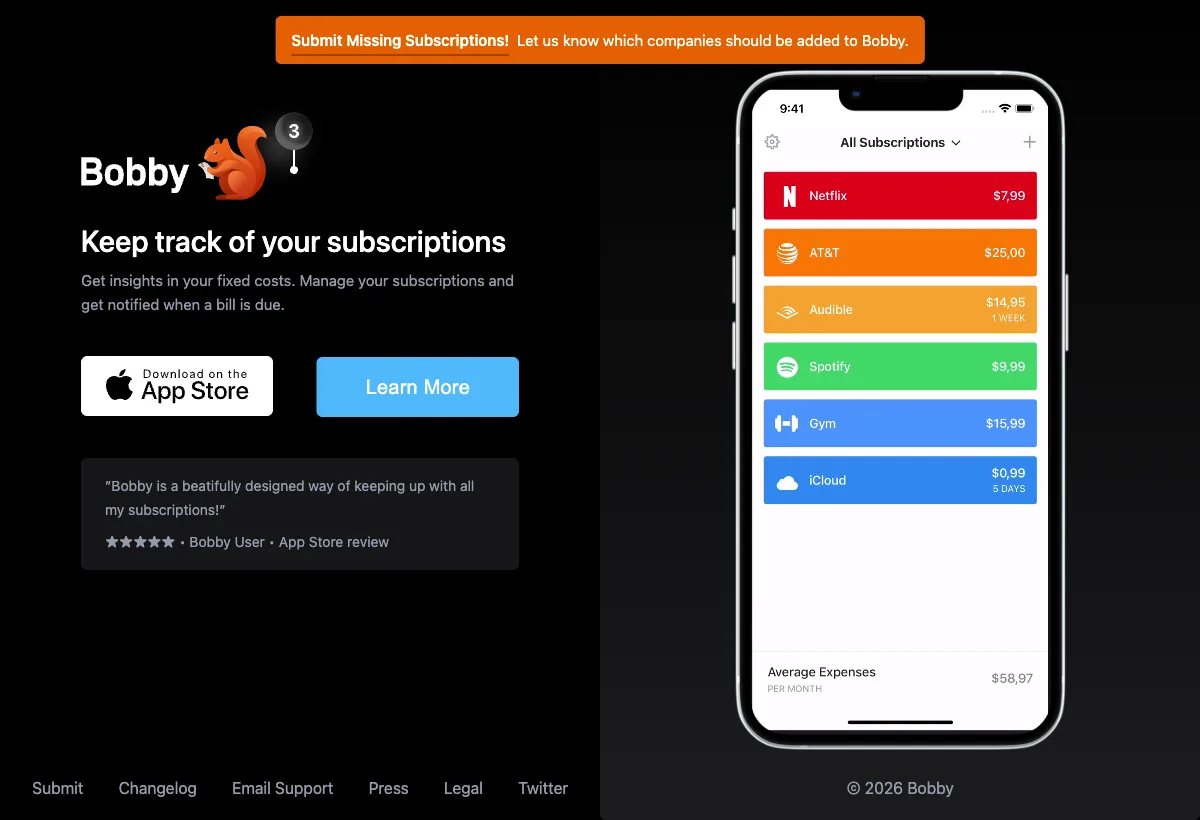
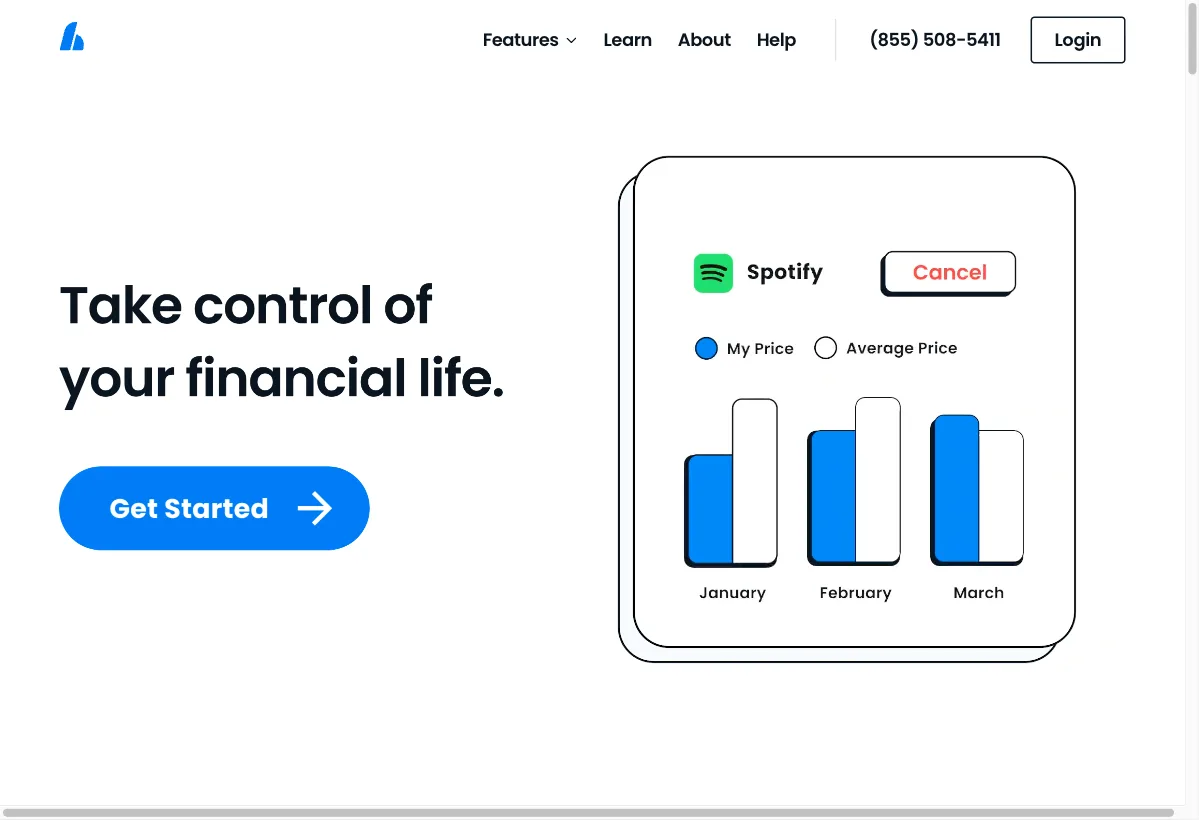
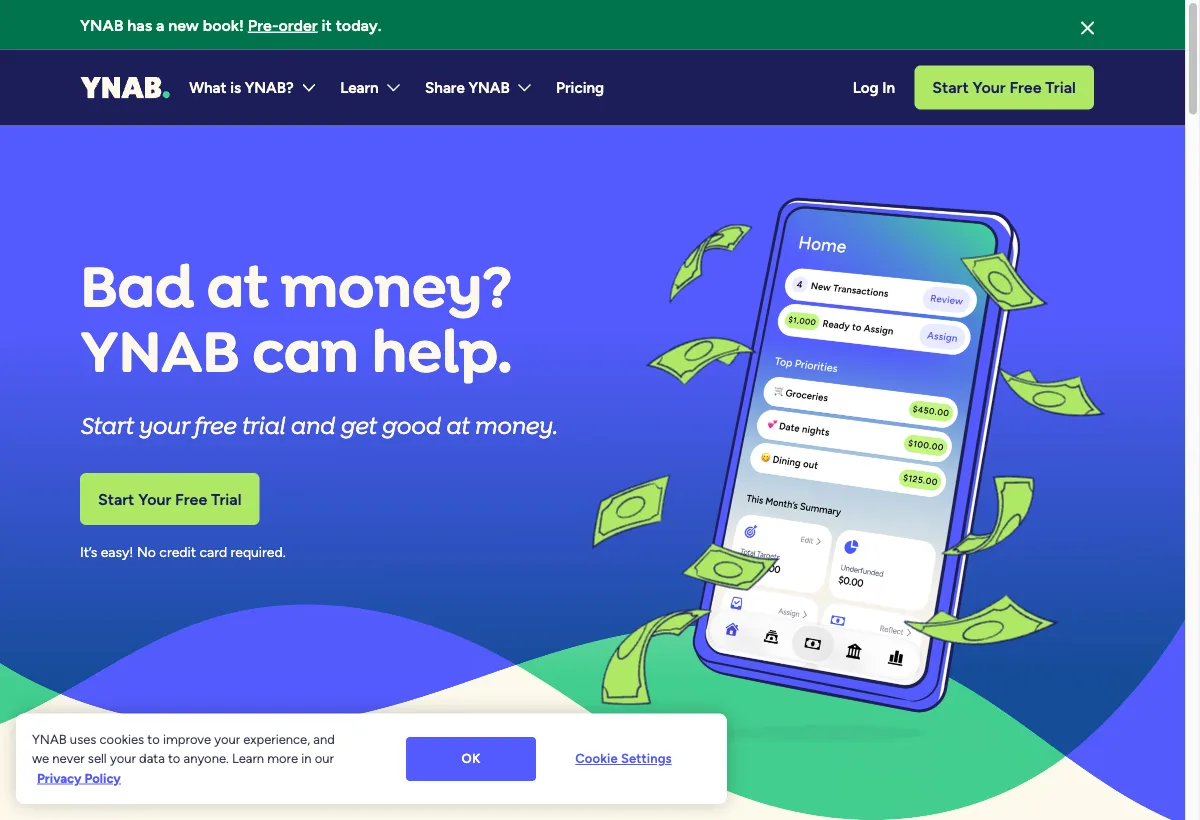
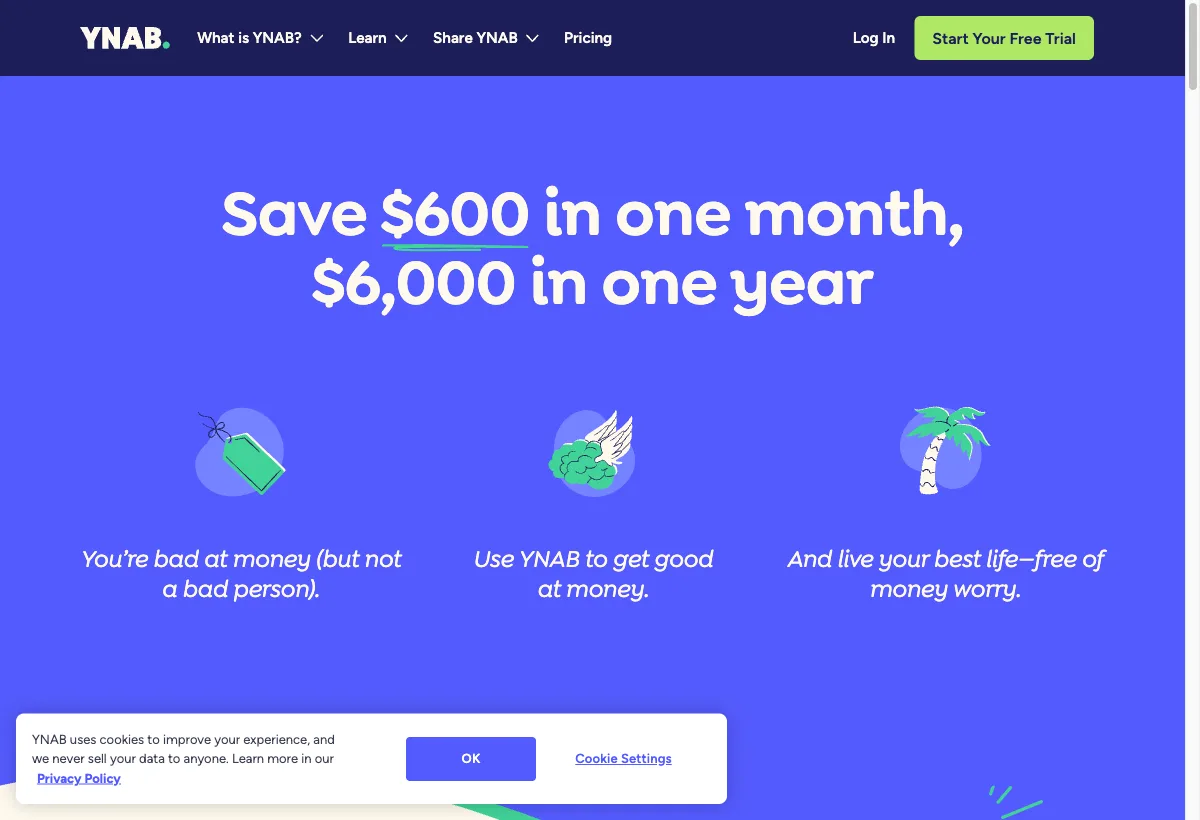
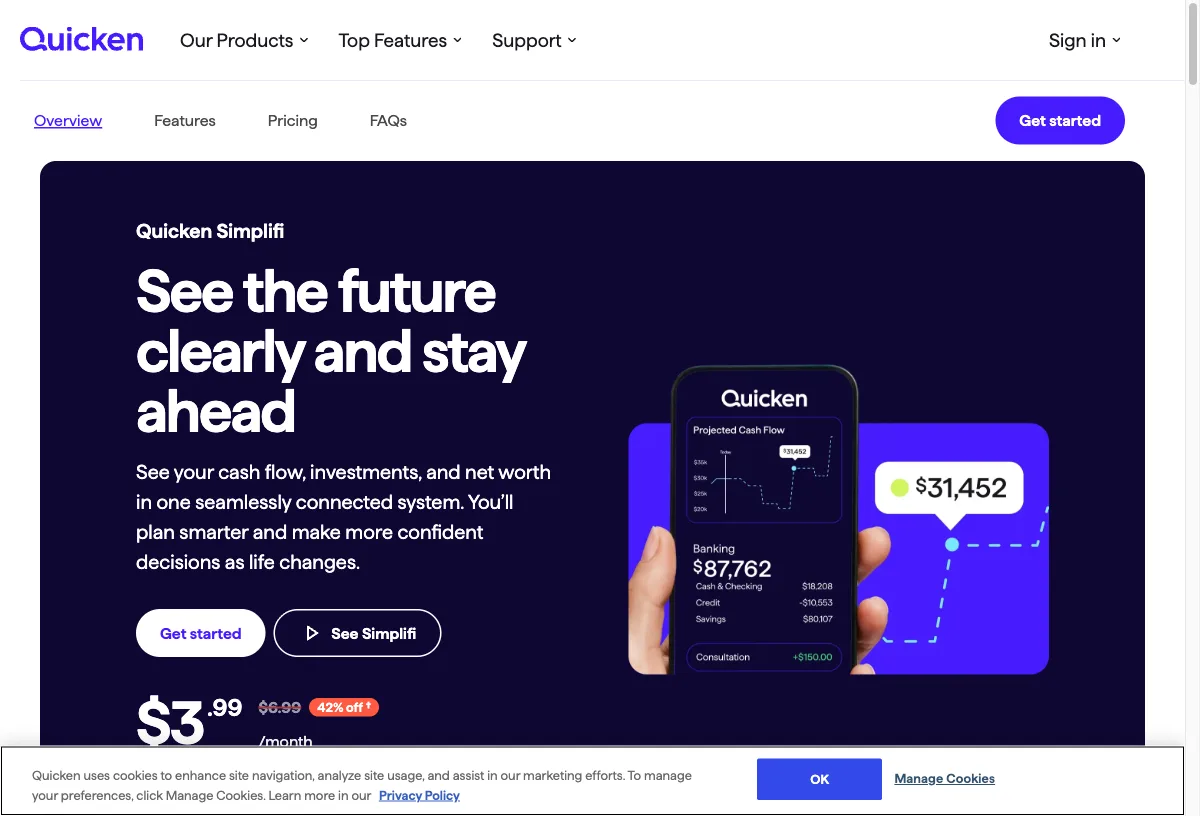
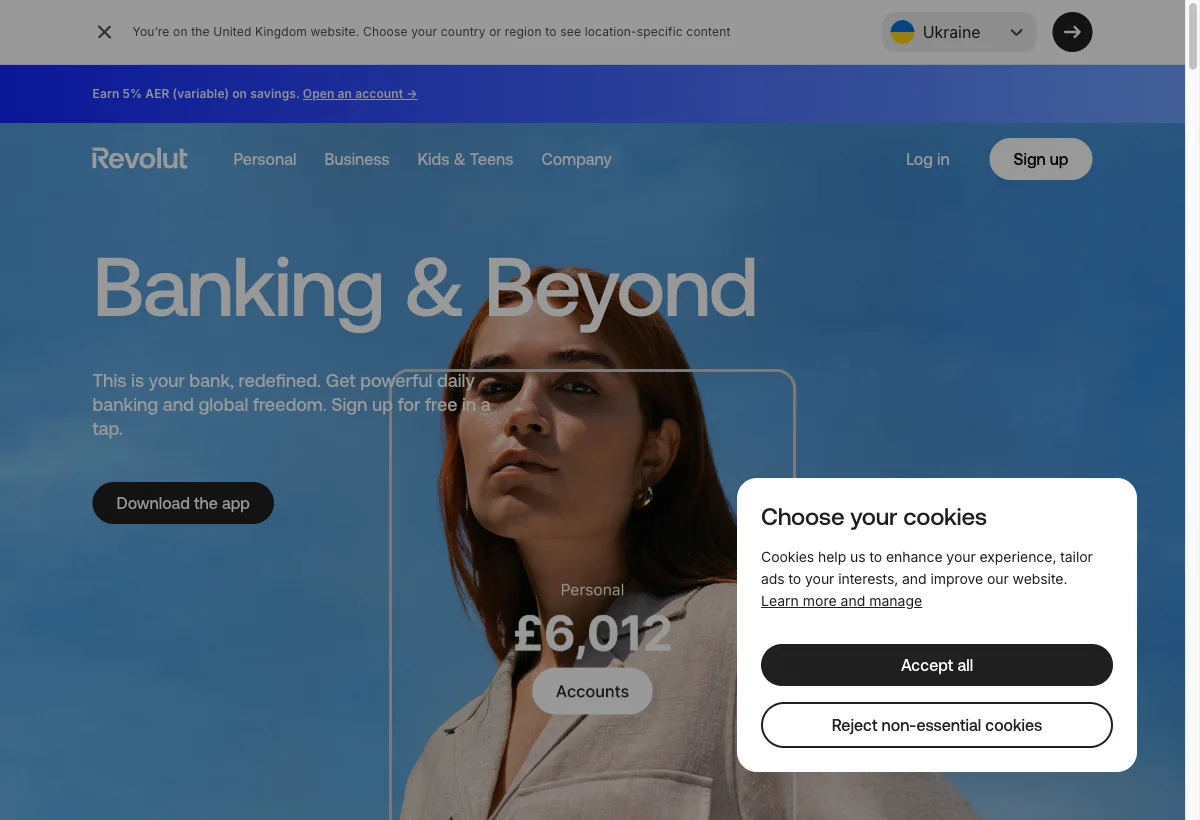
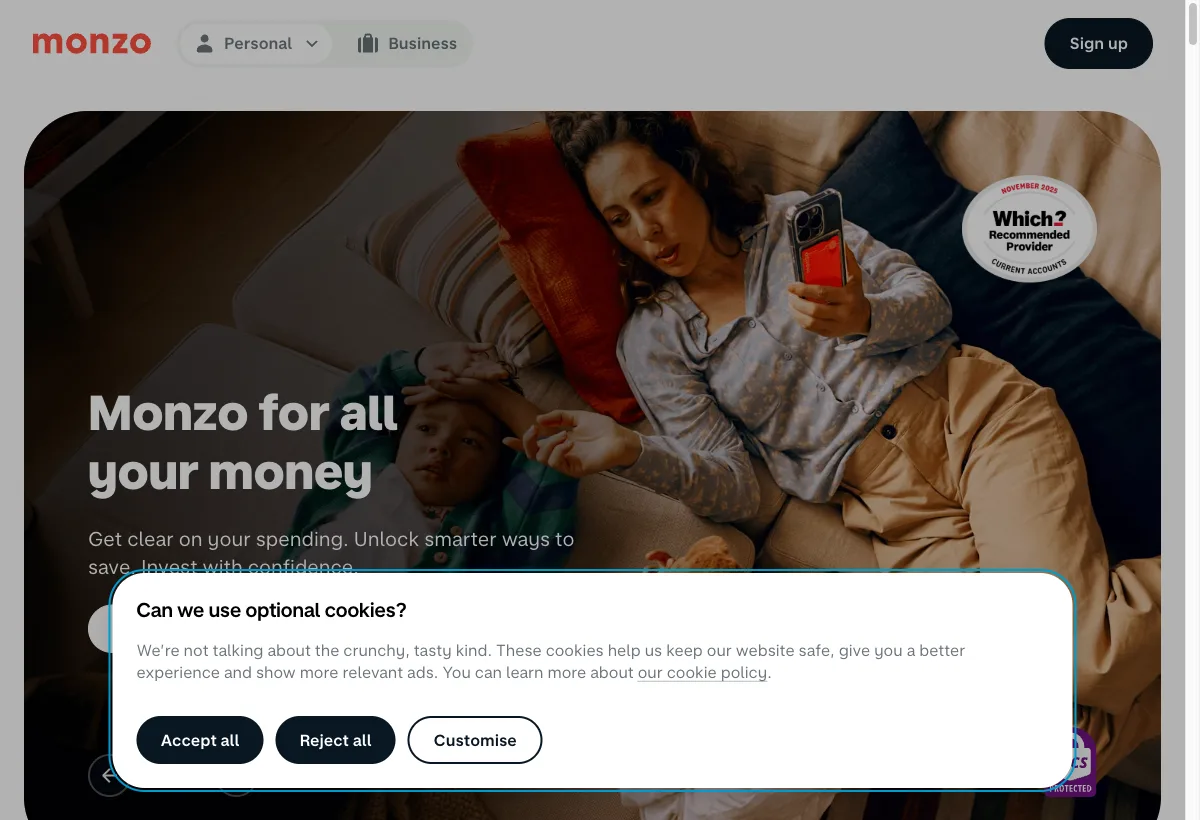
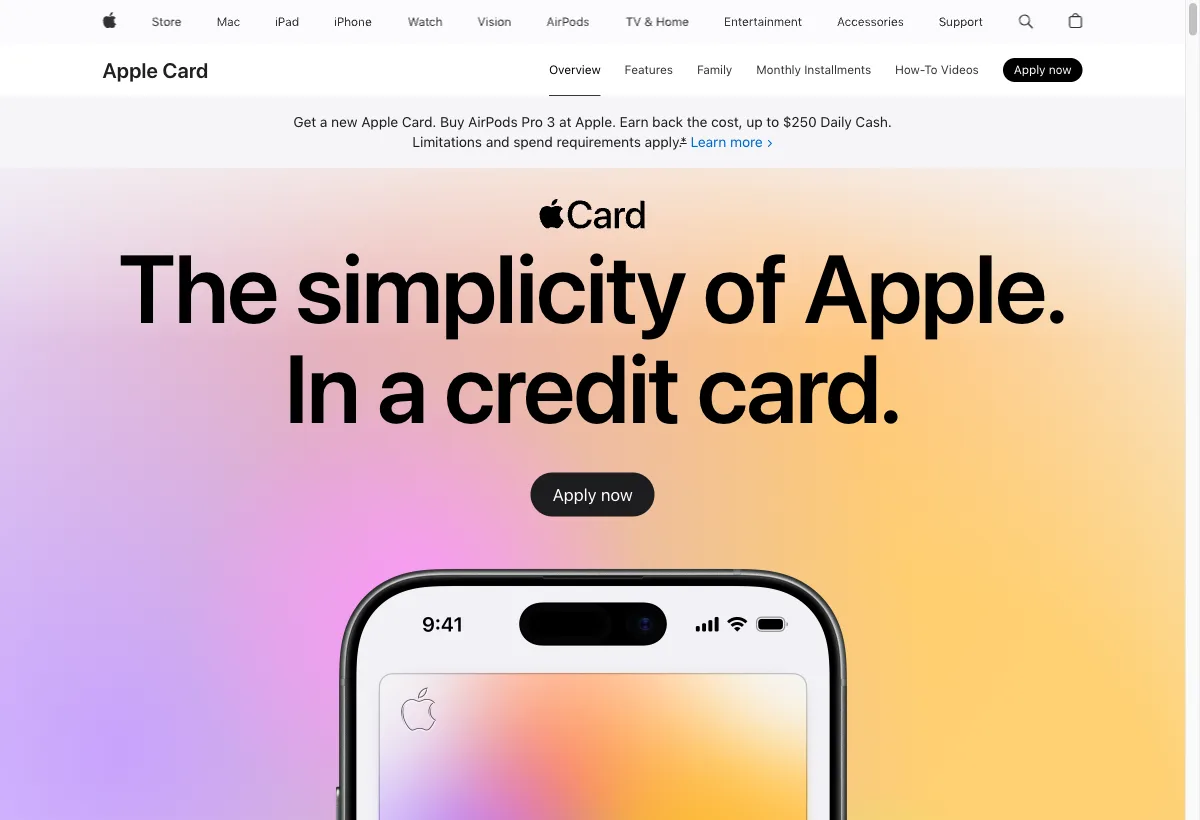
v_refresh: expanded to 15 competitors across 3 groups (HARD: direct competitors; SOFT: adjacent; ASPIRATIONAL: design benchmarks). All data from public pre-login pages. Screenshots captured via Playwright. Anything [? behind login] was not accessible.
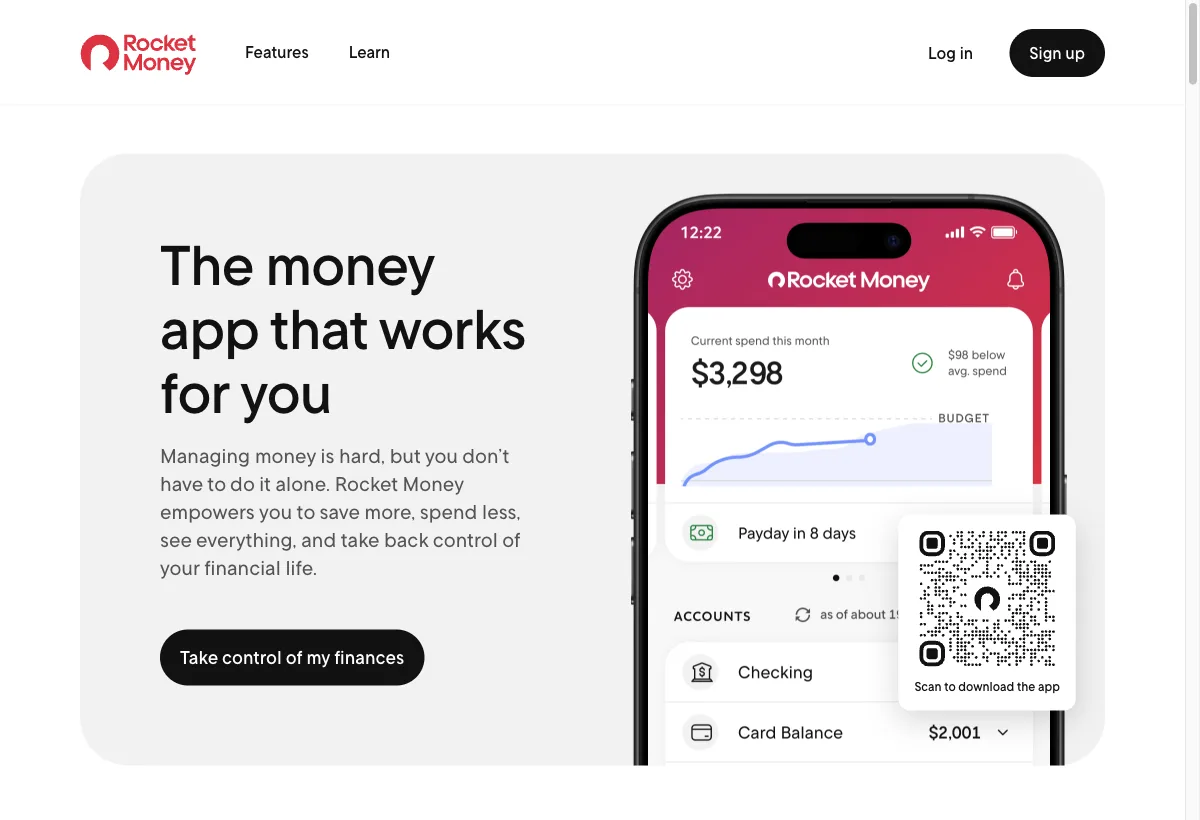
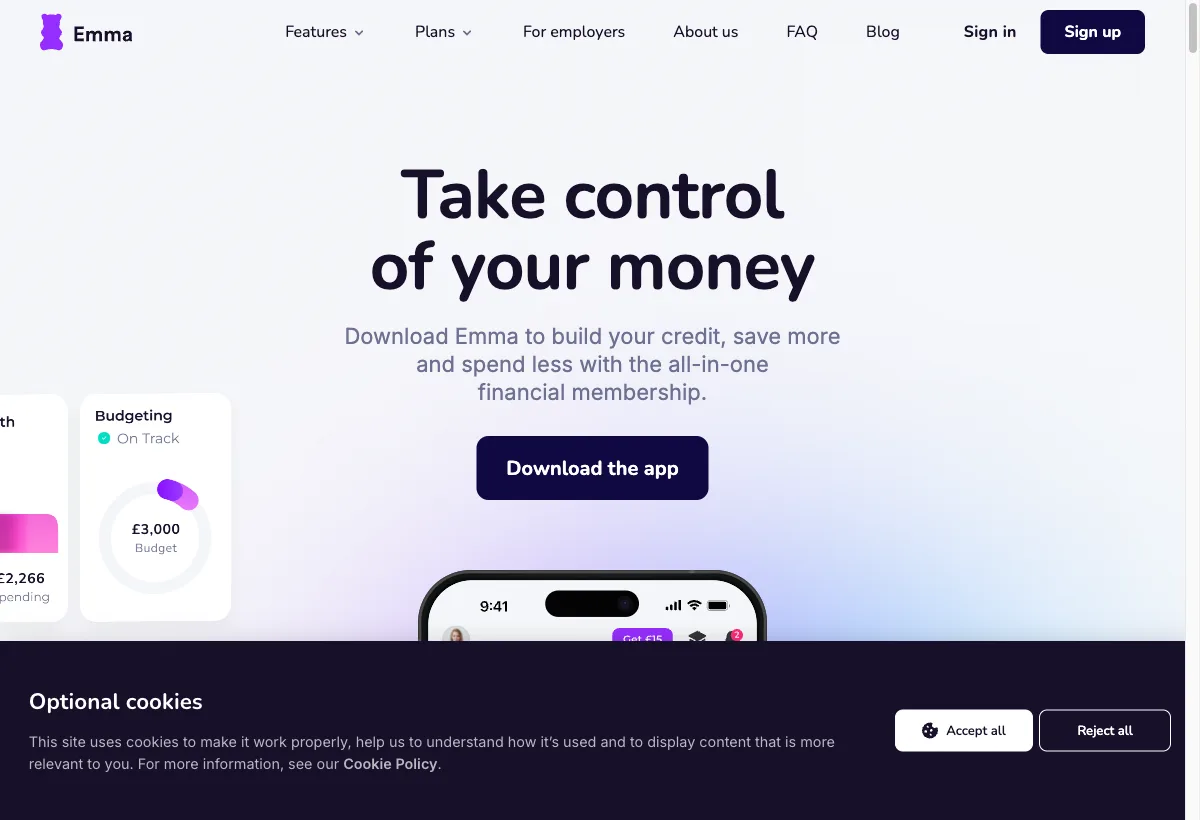
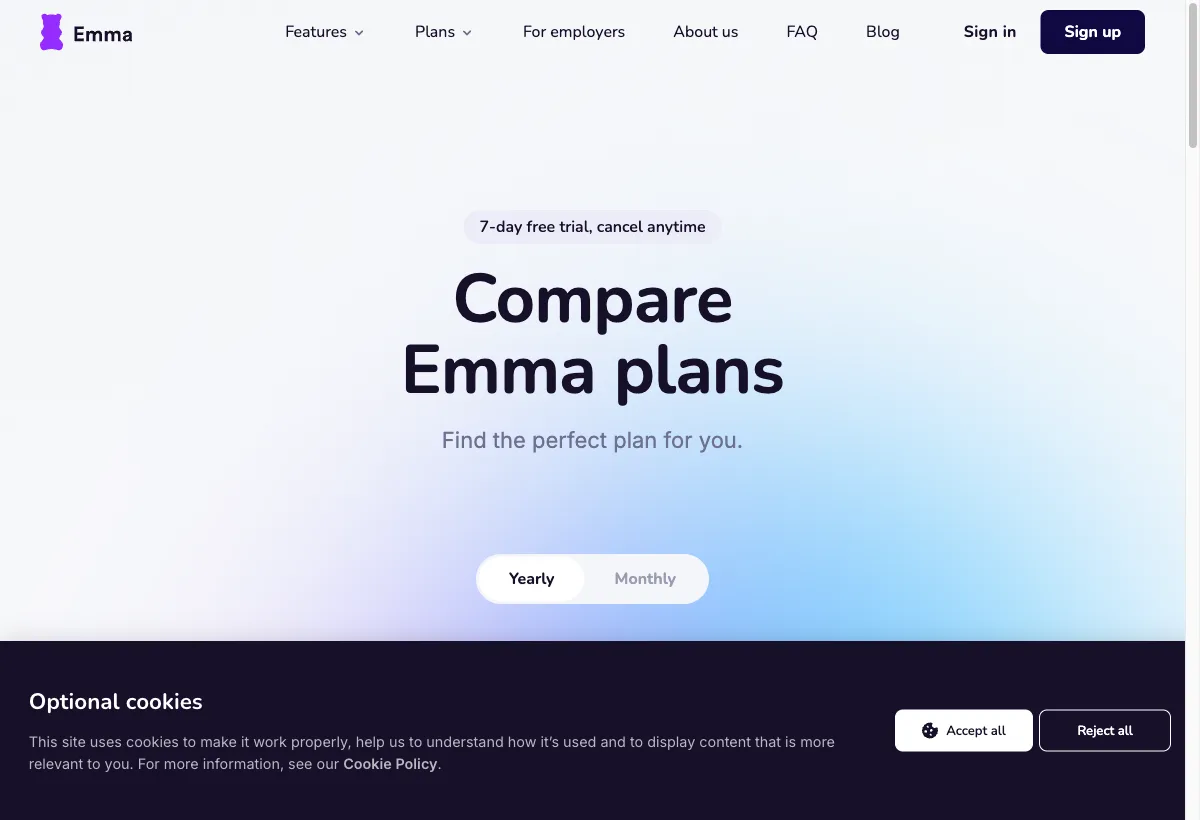
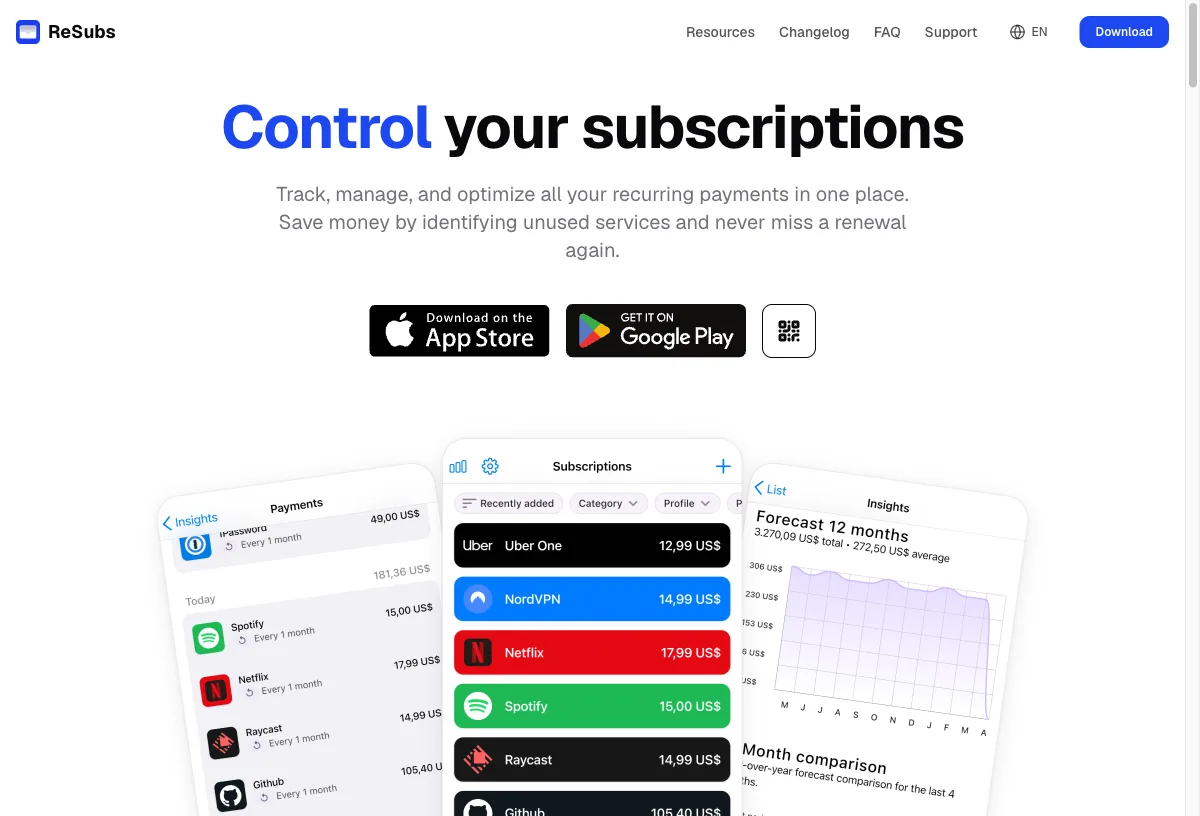
Competitor Screenshots (Public Pages Only)
HARD group (direct competitors)
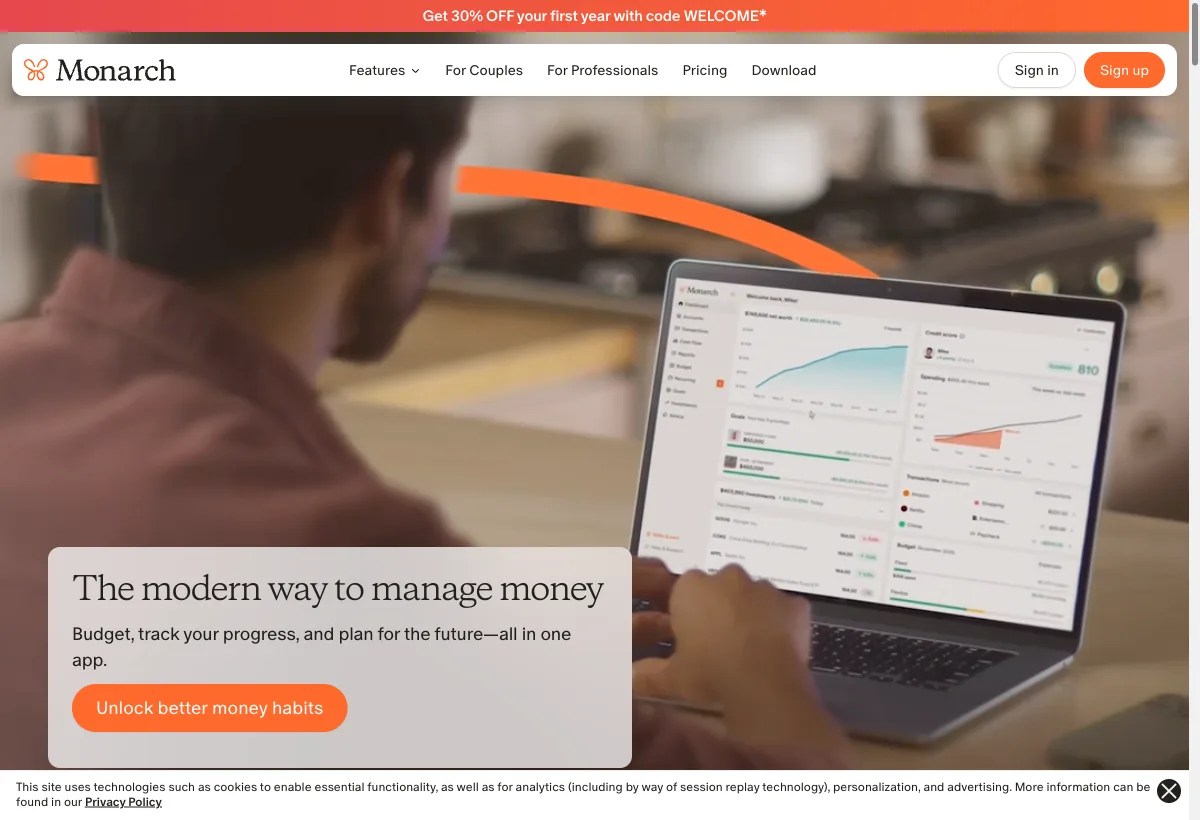
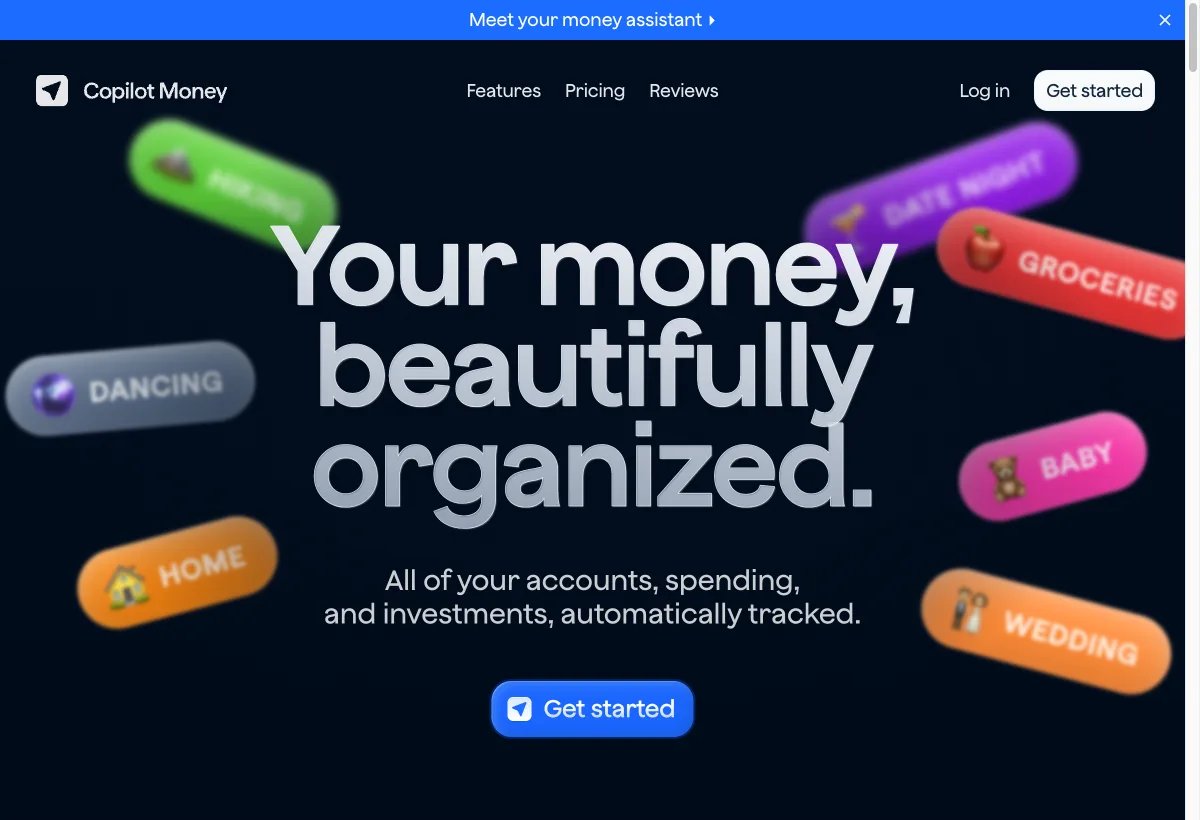
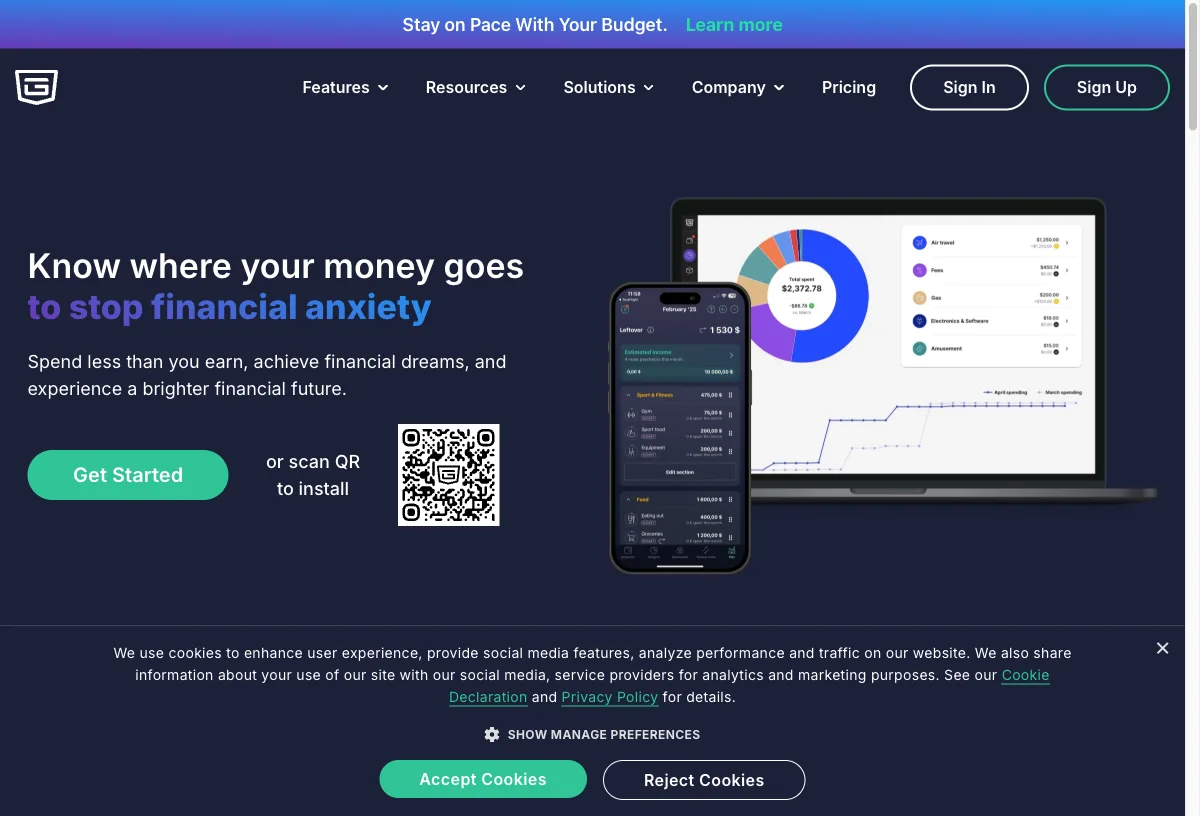
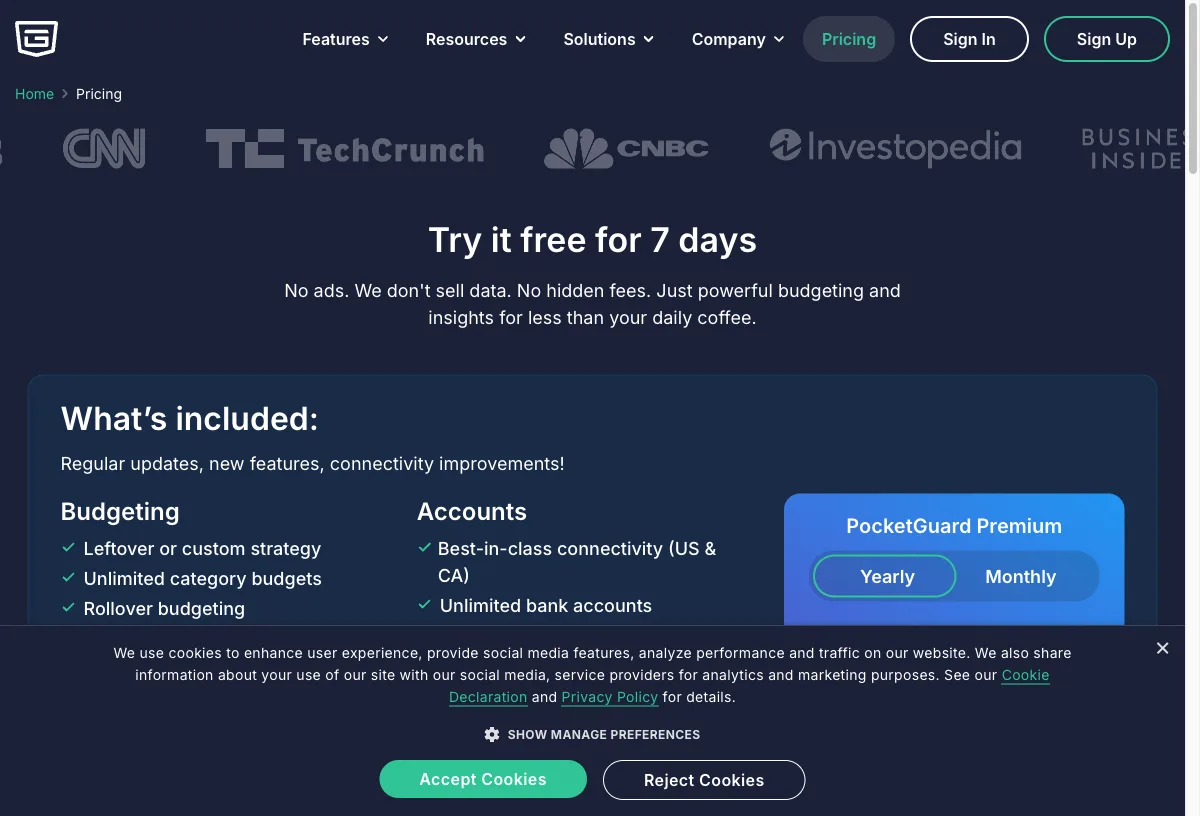
SOFT group (adjacent competitors)
ASPIRATIONAL group (design benchmarks)
HARD Competitors: 5 x 5 Comparison
| Product | Audience | Product Foundation | Key Mechanisms | Trust Signals | Monetization |
|---|---|---|---|---|---|
| Rocket Money Hard | Broad US, 10M+ members | All-in-one: subscriptions, budgeting, credit, net worth | Plaid auto-detect, cancellation concierge, bill negotiation | 10M+ members, $2.5B savings claim, FDIC banking | Free + $7-14/mo + 35-60% bill savings |
| Emma Hard | UK/EU millennials, 2M+ users | Full money app: subscriptions, budgeting, investing, payments | FCA open banking, subscription detection, collaborative budgets | FCA regulated, Forbes/FT logos, 2M+ users | Free + £4.99-14.99/mo (3 tiers) |
| ReSubs Hard NEW | Privacy-conscious, 18K+ users | Subscription tracker only, no bank connection | 461 preset subscriptions, cancel guides (30+), widget | 4.5 Google Play (718 reviews), no bank required | $0.99-4.49/mo or lifetime plan |
| Bobby Hard | iOS privacy-conscious users | Manual subscription tracker only | Manual entry, reminders, calendar view, widget | 4.7 App Store (8K reviews), no bank access | Free + one-time IAP |
| Hiatus Hard | US expense-reducers | Subscription + bill negotiation + light budget | Auto-detect, flat-fee bill negotiation, rate comparison | 2,000+ 5-star reviews, phone support | Free + $9.99/mo or $35.99/yr |
Sources: rocketmoney.com, emma-app.com, resubs.app, bobbyapp.co, hiatusapp.com
SOFT Competitors (pricing reference)
| Product | Price | Users | Key finding for Tendd |
|---|---|---|---|
| YNAB Soft | $14.99/mo or $109/yr | 500K+ (est.) | No free tier; market pays $15/mo for financial tools - validates higher pricing hypothesis. |
| Monarch Money Soft | $14.99/mo or $99/yr | [?] | No free tier; explicitly states "we do not sell your data" - data transparency as front-page trust signal. |
| PocketGuard Soft NEW | $12.99/mo or $74.99/yr | 1M+ users | $12.99/mo at 1M+ users validates price point well above original $4-6/mo hypothesis. Bill due alerts 3 days ahead is a validated retention mechanic. |
| Simplifi by Quicken Soft NEW | $3.99/mo (annual only) | [?] | Lowest price point in SOFT group. Quicken brand (legacy) dilutes the "calm" positioning. |
Sources: ynab.com, monarchmoney.com, pocketguard.com, simplifimoney.com
3 Common Patterns
P1: Bank connection as primary activation path. All auto-detection competitors use bank linking as step 1 or 2. Fastest route to value, but biggest trust barrier for the anxious user.
P2: Feature accumulation crowds out the core. Every subscription tracker that gained scale expanded into full personal finance. The original calm view is buried under feature depth.
P3 (new): Privacy vs. convenience binary - no middle path offered. Competitors force a choice: full bank access (Rocket Money/Emma/Hiatus) or fully manual (Bobby/ReSubs). No competitor offers a thoughtful middle path such as AI screenshot import or email parsing. This is a gap.
3 Key Differences
D1 (updated): Revenue model shapes product incentives. Rocket Money earns from bill negotiation percentages. Emma from tiered subscriptions. ReSubs from lifetime purchases. These different models explain different product priorities - Rocket Money needs billable negotiations, ReSubs has no churn incentive to keep users subscribed.
D2: Focused vs. all-in-one scope. Bobby and ReSubs have strong niche identities and high user satisfaction. The all-in-one products have higher churn risk and lower per-feature satisfaction.
D3: Data sharing transparency. Monarch Money explicitly states "we do not sell your data" - no direct competitor makes data use a front-page trust signal. Source: thepennyhoarder.com
Market Gaps (Our Opportunity)
| Gap | Source | Our Response |
|---|---|---|
| No calm-first subscription tracker exists | Phase 3, patterns P1/P2 | Core design principle #1: Calm over clever |
| No competitor earns trust before asking for bank access | Phase 4 benchmark C8 | Guided Reveal onboarding shows value before bank connection prompt |
| Cancel moment is never designed as a positive emotional experience | Phase 3 gap #4 | Cancel discovery is a "win" moment - celebrated, shared, and used as upgrade trigger |
| Plain language is not a market differentiator | Phase 4 Monzo benchmark | Active voice + real merchant names in every string |
| EU-native calm subscription tracker does not exist at the simple end | Phase 3 - Emma is EU but complex, Bobby is simple but iOS-only | Cross-platform web-first, EU open banking support from launch |
| No middle path between full bank connect and fully manual (new - v_refresh) | competitive-analysis.md P3 - privacy vs. convenience binary forces a choice with no middle option | AI screenshot import / email parsing as path B; equal UX weight to bank connect |
Benchmark: Trust and First-Time Clarity
The most strategically important dimension. Trust and clarity are not nice-to-haves - they are activation requirements for the anxious non-financial user.
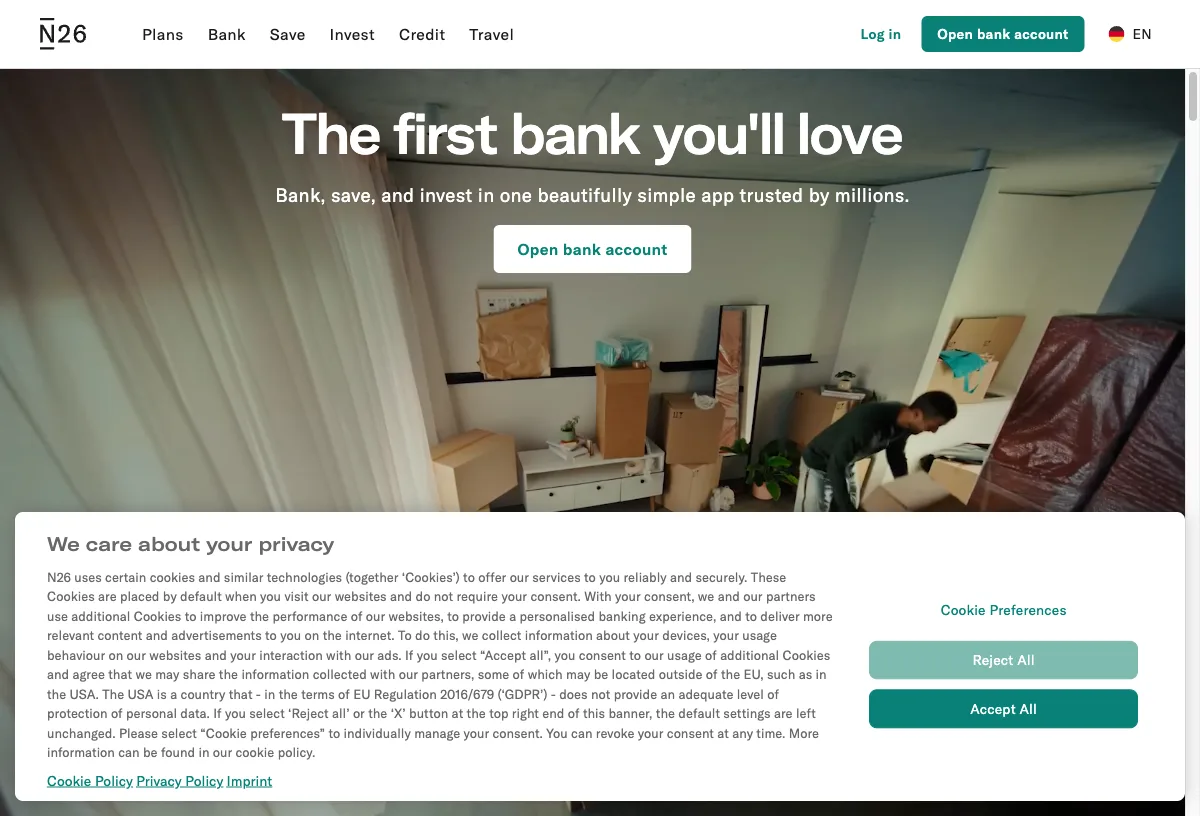
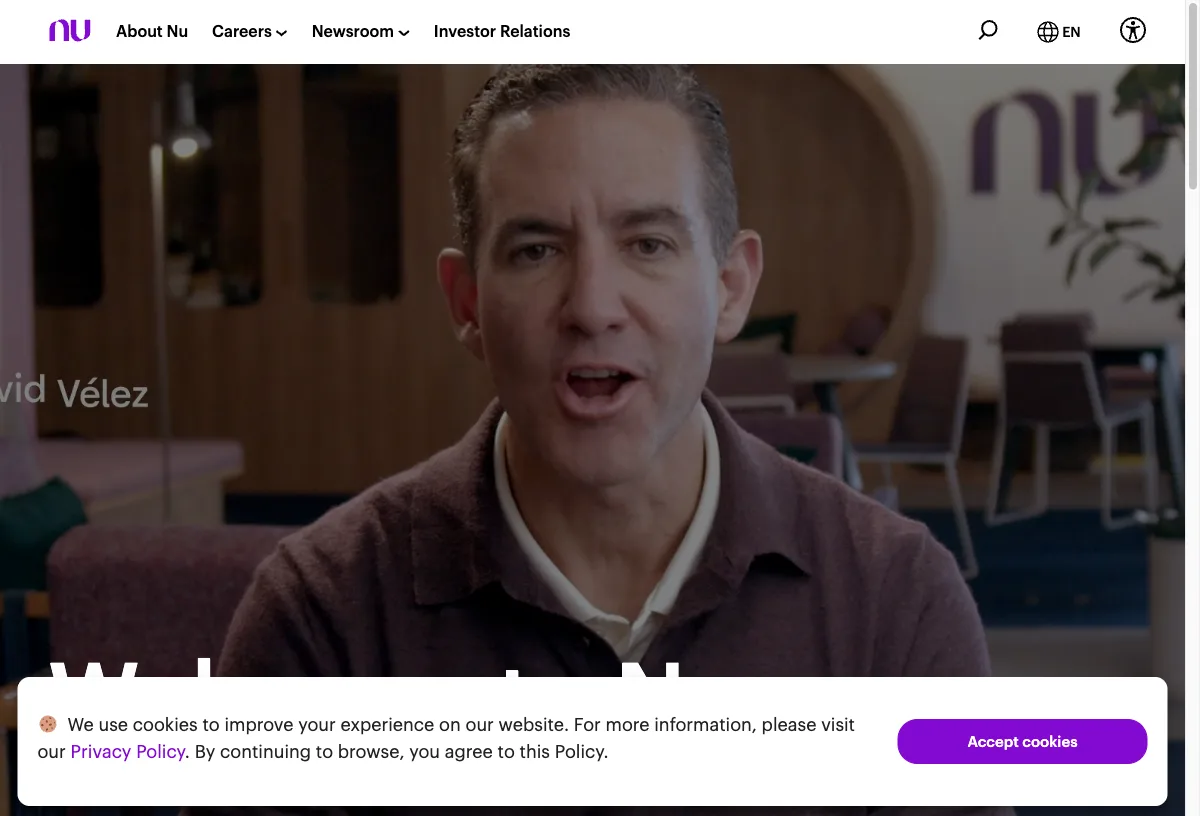
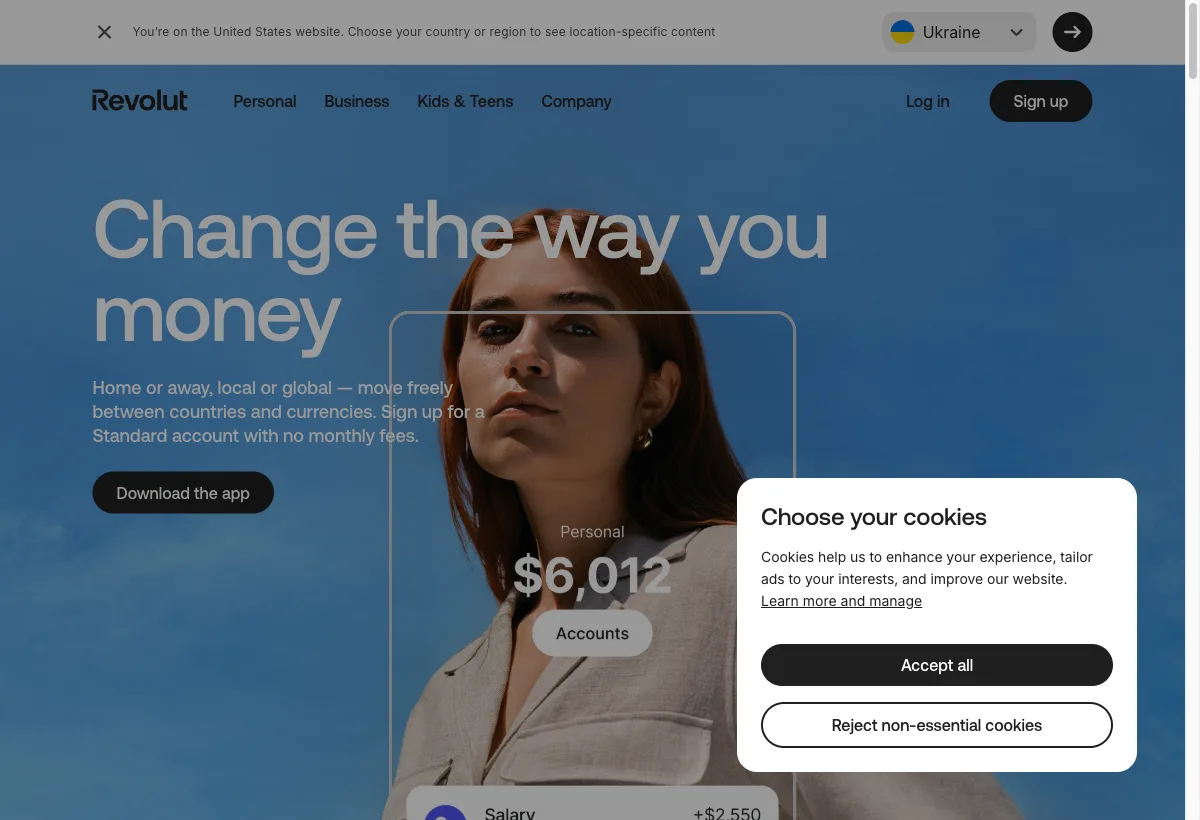
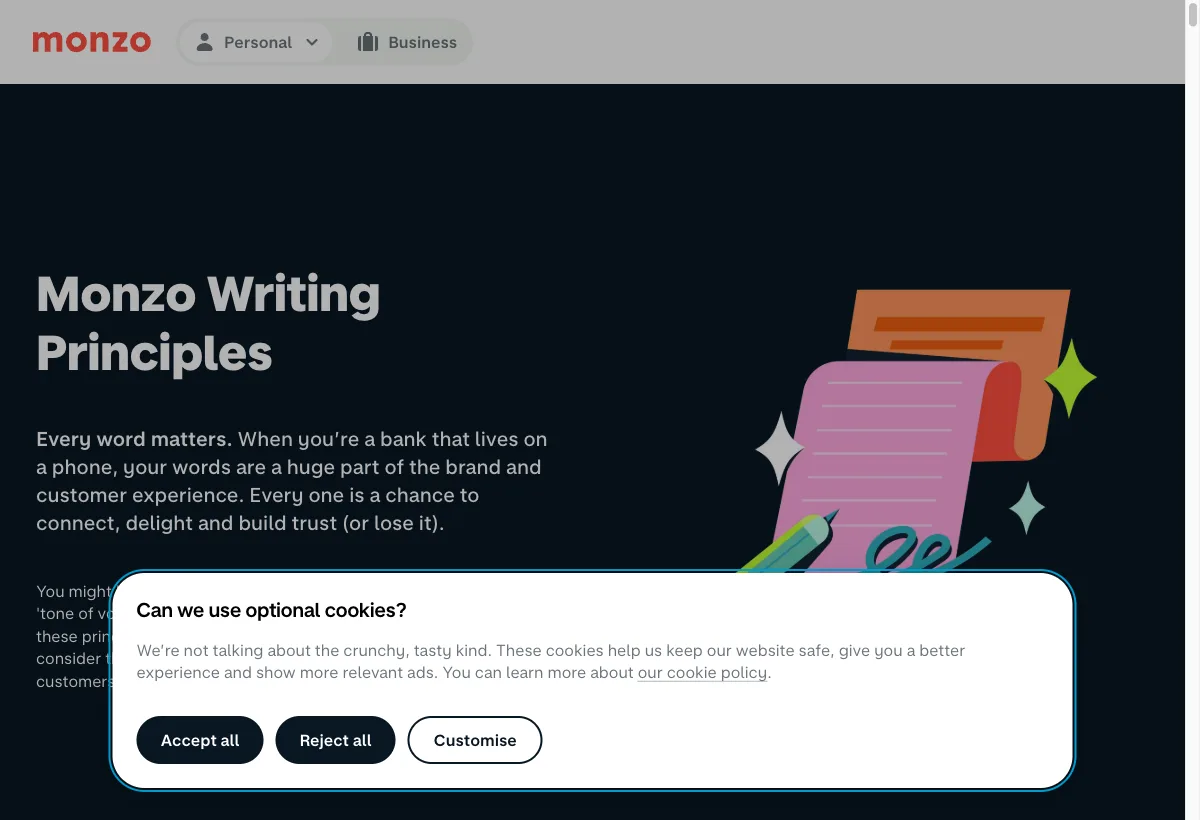
Benchmark Screenshots
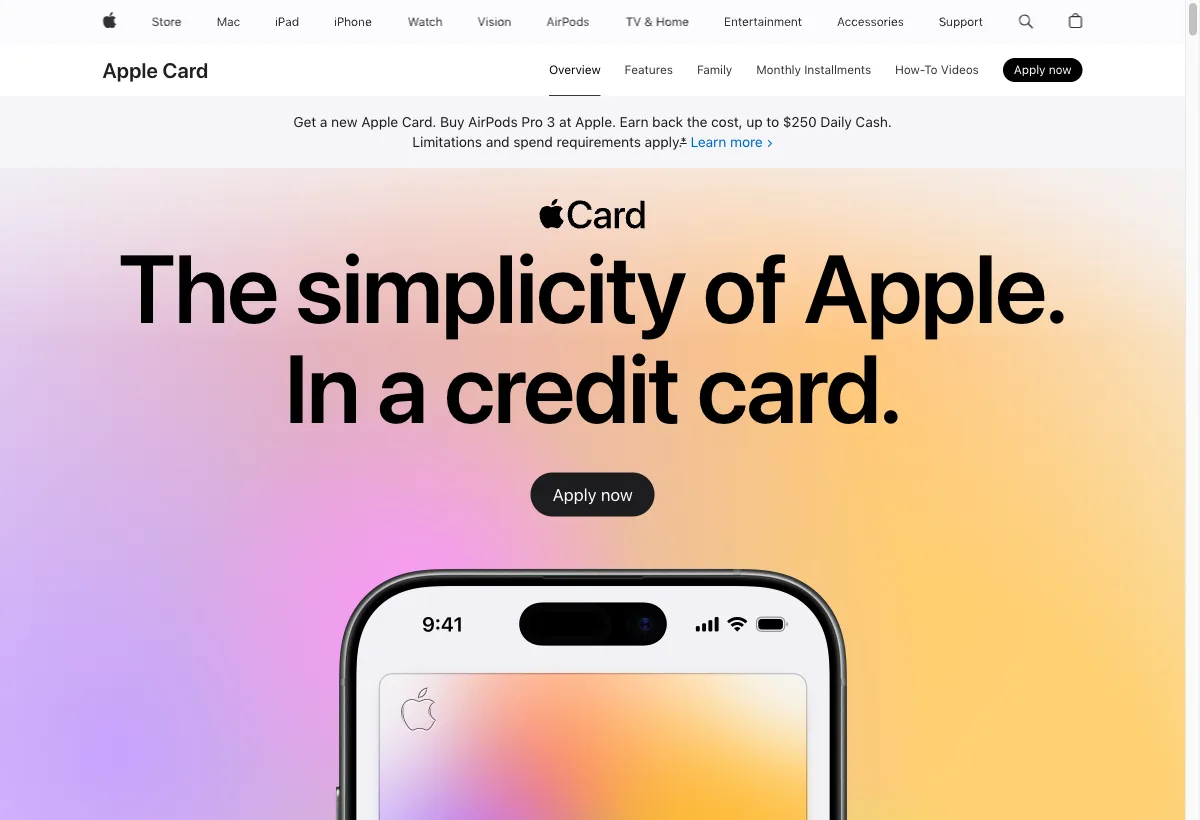
Score Table (1-5 scale, public pages only)
| Product | C1 First Screen | C2 Data/Fees | C3 Calm Money | C4 Friction | C5 Social Proof | C6 User Control | C7 Error Honesty | C8 Pre-Bank Value | Total /40 |
|---|---|---|---|---|---|---|---|---|---|
| Revolut | 5 | 3 | 4 | 4 | 4 | 4 | 3 | 3 | 30 |
| Monzo | 5 | 4 | 5 | 4 | 4 | 4 | 4 | 3 | 33 |
| Apple Card | 5 | 5 | 5 | 4 | 3 | 4 | 4 | 4 | 34 |
| Copilot Money | 4 | 3 | 4 | 3 | 3 | 4 | 3 | 2 | 26 |
| YNAB | 3 | 4 | 3 | 2 | 4 | 3 | 4 | 2 | 25 |
Top 3 Mechanisms to Carry to MVP
Active Voice + First-Person Responsibility (Monzo)
Principle: "Say who did the thing." Instead of "your payment was declined" (passive, vague), write "we couldn't take this payment - your card was declined by [merchant]" (active, specific, honest).
Where to use it: Every notification, error state, and alert in the product. "Spotify raised your price from $9.99 to $11.99 last month" not "a price change was detected."
Why it works: Passive voice in financial communication creates anxiety because the user does not know who is responsible. Active voice with clear attribution creates the feeling of being informed and in control.
Pre-emptive Trust Declaration - Name the Fear (Apple Card)
Apple Card's commitment: "No fees. Not even hidden ones." A specific, direct statement that names the user's biggest fear and explicitly denies it. Not generic reassurance - a precise, falsifiable claim.
Where to use it: Landing page hero ("We don't sell your data. Here's exactly what we read from your bank: [list]."), bank connection prompt, pricing page.
Why it works: For the anxious user, vague reassurances trigger more anxiety than no reassurance at all. A specific statement that names the fear is processed as evidence of honesty, not marketing.
Transaction Clarity Layer - Real Names and Logos (Apple Card)
Apple Card replaces cryptic bank codes (e.g. "AMZN MKTP US*AB123") with real merchant names, logos, location, and category. Every transaction is immediately recognizable.
Where to use it: Every subscription card in the list. Show logo, real name, category tag, amount, next date. Never show raw bank transaction strings.
Why it works: Cryptic transaction strings are a primary source of financial anxiety. Showing the real merchant name converts confusion (a negative state) into recognition (a positive one).
Will NOT Work: YNAB Zero-Based Budgeting
YNAB's method requires knowing your monthly income precisely, pre-allocating it to 20-30+ categories, updating allocations when reality diverges, and reviewing the system weekly. Each step is stressful for the anxious non-financial user.
Why it fails here: YNAB's own review ecosystem acknowledges: "Most people take 2-4 months to get it." Our user needs calm in session 1, not a 3-month learning curve. The product should be designed so that seeing subscriptions clearly is itself the complete outcome - not a stepping stone to full budgeting.
UX Patterns
Based on the validated Strategy (Section 1) and audience behavior analysis.
5 Patterns Evaluated
Pattern A: Automated Dashboard (Hub-and-Spoke) Primary (return sessions)
Central dashboard auto-populated from bank data. Each subscription is a card with logo, name, amount, next date. Works best after trust is established. Used by: Rocket Money, Emma, Hiatus.
Pattern C: Guided Reveal (Story Flow) Primary (onboarding)
Onboarding structured as a progressive reveal: Step 1 - "Here's your monthly total." Step 2 - "Here are your subscriptions by category." Step 3 - "Here are 2 you might want to review." Turns financial data review from a task into an experience. Not used as primary pattern by any current competitor.
Pattern B: Manual-Entry Calendar Alternative (if bank adoption <20%)
User manually enters subscriptions. Primary view is a calendar of upcoming payments. No bank connection required. Used by: Bobby. Preserves calm, low-friction value if auto-detection fails at scale.
Pattern D: Notification-First (Push-Driven)
Product primarily experienced through notifications, not the app. Alert tells the user when something changed. App is the secondary surface. High-value as a retention layer but not primary UX. Used as overlay by Rocket Money, Emma.
Pattern E: Conversational / AI-Assisted Does Not Fit
Chat or AI interface for managing subscriptions. Breaks the "glanceable" requirement. For the anxious user, an AI chat creates new uncertainty rather than removing it. A conversation requires 10-30 seconds minimum vs. 3 seconds for a well-designed dashboard. Opposite of our calm clarity differentiator.
Why This Combination Works
Reason 1 - JTBD
Solves the financial-avoidance problem. The Guided Reveal gives the anxious user one thing to do: "let me show you." No choices, no empty dashboard, no configuration before value.
Reason 2 - Competitor Gap
No competitor has designed the first subscription view as a positive emotional experience. The Guided Reveal is directly analogous to Spotify Wrapped - a personal data reveal as a satisfying moment.
Reason 3 - Revenue
Creates the natural upgrade trigger. The Guided Reveal ends at the moment of highest motivation - after seeing the list, the user is ready to act. The upgrade to paid lives here.